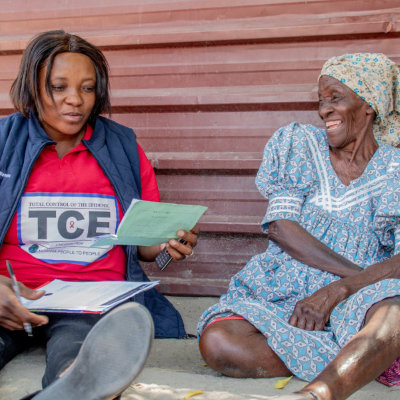


 In the rural areas of Tsumkwe and Omatako in Namibia’s Otjozondjupa Region, many people live far from health facilities. Reaching them with HIV and TB services has always been a challenge. The villages are spread out, the roads are long and sandy, and before, our TCE Field Officers could only go as far as their feet could carry them or wait for a shared vehicle from the clinics. This made it hard to offer regular HIV and TB services, especially in places that need them the most.
DAPP Namibia gave a big boost to the work of three TCE Field Officers in these areas by providing them with electric bicycles (e-bikes). These e-bikes allow the Field Officers to reach up to 40 kilometres, making it much easier and quicker for them to reach people in need.
With the e-bikes, our TCE Field Officers are now able to visit more people more often. They use the bikes to screen people for HIV and TB, collect sputum samples from those with symptoms, and take the samples to the clinic quickly for testing. They also use the bikes to support people who are already on HIV treatment or TB medication, making sure they stick to their treatment, reminding them about appointments, and offering counselling when it’s needed.
If someone misses an appointment or stops treatment, the Field Officers can now find them much faster and support them to get back on track. The e-bikes are helping reduce the number of people lost to follow-up and making sure that no one is left behind.
This small but powerful tool is making a big difference. It’s not just a way to move around, but it’s a way to bring health and support to people who otherwise wouldn’t get it. Thanks to the e-bikes, the fight against HIV and TB in rural Otjozondjupa is getting stronger.
At DAPP Namibia, we believe that everyone deserves access to health services, no matter where they live. These e-bikes are helping us reach that goal.
