DAPP Namiba DAPP Namiba
Open menu
  • Home
  • Who We Are
    • About DAPP Namibia
    • Our History
    • Our Partners
    • A Member of Humana People to People
  • What We Do
    • Climate Change Action
    • Health
    • Education
    • Community Development
  • Vacancies
  • Procurement
  • More
    • Articles
    • Videos
    • Publications
  • Contact Us
    • Contact details
    • Enrolment forms
  • Home
  • Who We Are
      • Back
      • Who We Are
      • DAPP Namibia History
      • Our Partners
      • A Member of Humana People to People
  • What We Do
      • Back
      • Health
      • Education
      • Community Development
      • Climate Change Action
  • Procurement
  • Vacancies
  • More
      • Back
      • Articles
      • Publications
      • Videos
  • Contact Us
      • Back
      • Contact details
      • Enrolment forms
  1. You are here:  
  2. Home
  3. Blog Climate Change

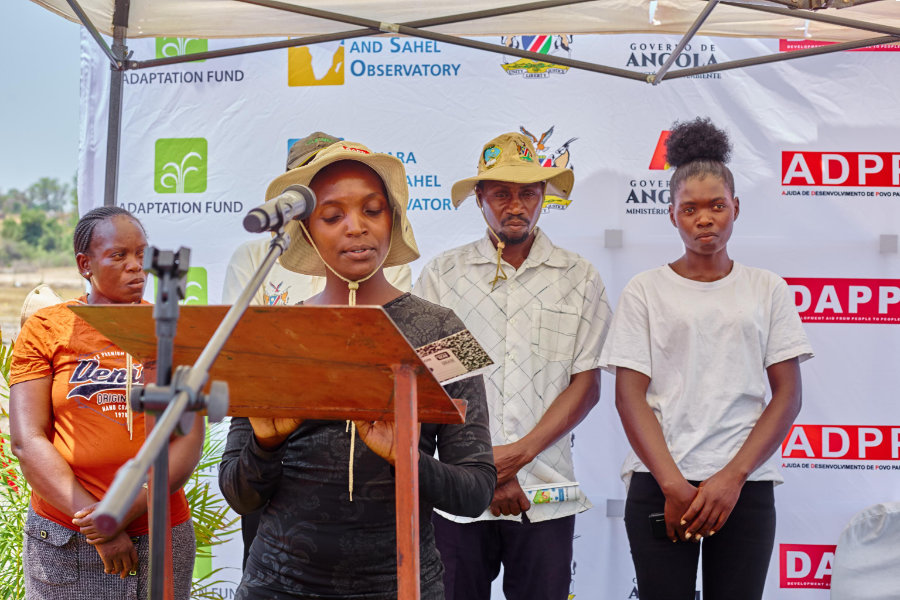
Youth Representative Speech - Shikanga Kristofine

002 Speech from the Youth Representative during the official  launch webCCAC LAUNCH – 16 October 2026: YOUTH REPRESENTATIVE SPEECH
Name: Shikanga Kristofine

Thank you for giving me this opportunity to speak as one of the young people participating in the demonstration plot. My name is Shikanga Kristofine. I am the secretary of the Water Users Association (WUA) and a kindergarten teacher in the community.

Initially, I was concerned about how I would manage my teaching responsibilities in the morning while participating in the project. However, I decided to register during the May school holidays.

The project began with activities such as weeding, removing tree stumps and planting seeds in the nursery. When the seedlings were ready for transplanting, we prepared seedbeds and transplanted them. After the school reopened, I continued teaching in the mornings and working in the garden in the afternoons.

There is trust and unity among the members. Whenever activities take place in the morning, the other members inform me about what they have done.

Allow me to share what we have learned about climate change.
I would like to begin with two questions:
Do you remember how cold June used to be?
Do you remember when the rainy season used to arrive on time?

Our grandparents remember, but we are growing up in a generation where the seasons seem to have lost their way.
This confusion of the seasons has a name: climate change.

Since the beginning of time, the Earth has been protected by a blanket of gases. These gases keep the Earth warm enough for us to live. However, during the past 100 years, human activities have made this blanket too thick, causing the Earth to become hotter.
Climate change is no longer a future threat; it is a present reality. Around the world, communities are experiencing more frequent droughts, floods, heatwaves, wildfires and unpredictable weather patterns.

In our country, we experience the effects every day. Our rainfall has become unpredictable, drought has become common, underground water is running out, extreme heat is causing sickness and suffering, and our food security is under threat.
In this garden, we learn about ways to adapt to climate change and put them into practice.
We plant different types of crops and use intercropping to control pests. We have also planted cassava, which many of us had never grown in our households before. Instead of buying chemical pesticides from shops, we make affordable natural remedies using garlic, chillies, neem leaves and dishwashing soap.

We make our own compost and have also learned how to make fuel-efficient wood-burning stoves.
Here at Shinyungwe, our understanding has grown, and we now know that we can help fight climate change.
The project has also helped to reduce violence among young people in the community. We spend our days working productively in the garden and planning what we will do the following day.

I have also noticed that some young people who used to consume a lot of alcohol have reduced their drinking.
This garden has brought new life to us and the wider community. We can now access fresh food, and some people can exchange their produce for maize meal and mahangu.

I invite young people who are sitting at home to come and join us. There is much more to learn, including how to raise chickens and goats and how to keep bees.

Come, fellow young people, and gain the knowledge and skills needed to succeed in this changing climate.
THANK YOU

Official opening of the Linus Shashipapo Climate Change Action Center

001 Official Launch for Linus Shashipapo CCACOn 16 October, DAPP Namibia, as the National Executing Entity for the ADSWAC Project, together with the Ministry of Education, Innovation, Youth, Sports, Arts and Culture, officially opened the Linus Shashipapo Climate Change Action Centre in the Kavango East Region.

The official opening followed the signing of a Memorandum of Understanding between DAPP Namibia and the Ministry to use the Linus Shashipapo Youth Centre as a Climate Change Action Centre under the ADSWAC Project.

Earlier this year, DAPP Namibia began constructing a prefabricated building comprising four offices, three storerooms, a meeting room, a kitchen and ablution facilities.

Speaking at the event, DAPP Namibia Managing Director, Mr Alfred Besa, explained that ADSWAC is a regional project implemented along the Kavango River in Namibia and Angola. The project is implemented by the Sahara and Sahel Observatory (OSS) with funding from the Adaptation Fund.

Delivering the keynote address on behalf of the Minister of Education, Innovation, Youth, Sports, Arts and Culture, Mr Paulus Nghitembua, Deputy Executive Director for Lifelong Learning, Arts and Culture, thanked DAPP Namibia for identifying the opportunity and working with the Government to transform it into a functional Climate Change Action Centre for agriculture and entrepreneurship.

He noted that the Centre has strong potential to become a regional demonstration and learning hub for youth climate action.

Mr Boniface Kahare, Deputy Director in the Governor’s Office, representing the Governor of the Kavango East Region, commended DAPP Namibia for partnering with the Ministry to revive the Centre. He encouraged development partners working in Namibia to continue aligning their interventions with national priorities and strengthening coordination with government structures at national and regional levels.

The event was attended by government representatives, traditional authorities, learners from three schools, producer organisations and members of the public.

The Centre will provide practical demonstrations of climate change adaptation measures, including a nursery, firewood-saving stoves, an improved latrine and a model field. It will also support communities through early warning systems, capacity-building activities, climate change adaptation campaigns, and the sharing of results and lessons learned.

Together, we are strengthening community resilience and advancing practical climate action in the Kavango East Region.

Growing Hope in Kavango West: How Simple Tools Are Helping Farmers Face Climate Change

Article 2

Communities in Kavango West, Namibia, are no strangers to tough weather. Long dry spells and changing rainfall patterns have made it harder for families to grow enough food and make a living from farming. As climate change continues to affect the region, many farmers are struggling to keep up with these challenges using only basic resources and traditional methods.

The Adaptation in Drought-Struck South Western African Communities (ADSWAC) project, run by DAPP Namibia, is working with local farmers in both Namibia and Angola to support them in coping with changing weather conditions.

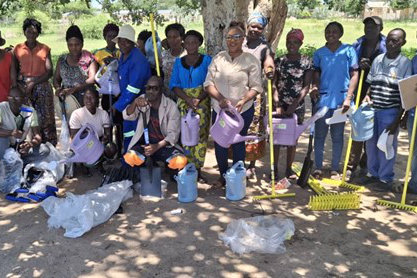
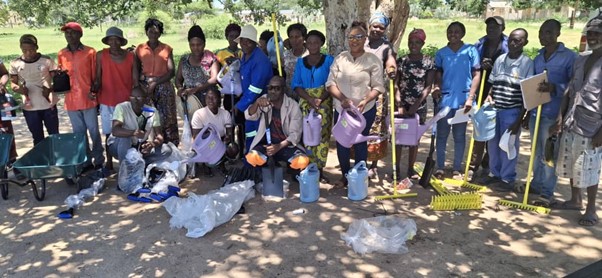
On February 20, 2025, a big step forward was taken. Farmers from the Kahenge Producer Organisation (PO) received new garden tools to help prepare for the upcoming planting season. This tool handover was more than just a donation—it was a boost of confidence for the community.

The event was attended by important local leaders, including Mr. Fillipus Tenga, the Honourable Councillor of Nkurenkuru Constituency, and members of the Kavango West Regional Council. Their presence showed strong support for the farmers and the ADSWAC project.

With these new tools and ongoing guidance from the project team, farmers are now better prepared to plant crops that can survive in tough conditions. The project is also introducing simple yet effective farming methods, like planting in pot holes to save water and improve soil health.

These efforts are already making a difference. Families are starting to grow more food, and communities are gaining the skills and confidence they need to face the future. Most importantly, farmers now feel they are not alone—they are part of something bigger that’s bringing real change to their lives.

Through projects like ADSWAC, hope is growing in Kavango West—one seed, one tool, and one farmer at a time.

Youth Representative Speech - Shikanga Kristofine

002 Speech from the Youth Representative during the official  launch webCCAC LAUNCH – 16 October 2026: YOUTH REPRESENTATIVE SPEECH
Name: Shikanga Kristofine

Thank you for giving me this opportunity to speak as one of the young people participating in the demonstration plot. My name is Shikanga Kristofine. I am the secretary of the Water Users Association (WUA) and a kindergarten teacher in the community.

Initially, I was concerned about how I would manage my teaching responsibilities in the morning while participating in the project. However, I decided to register during the May school holidays.

The project began with activities such as weeding, removing tree stumps and planting seeds in the nursery. When the seedlings were ready for transplanting, we prepared seedbeds and transplanted them. After the school reopened, I continued teaching in the mornings and working in the garden in the afternoons.

There is trust and unity among the members. Whenever activities take place in the morning, the other members inform me about what they have done.

Allow me to share what we have learned about climate change.
I would like to begin with two questions:
Do you remember how cold June used to be?
Do you remember when the rainy season used to arrive on time?

Our grandparents remember, but we are growing up in a generation where the seasons seem to have lost their way.
This confusion of the seasons has a name: climate change.

Since the beginning of time, the Earth has been protected by a blanket of gases. These gases keep the Earth warm enough for us to live. However, during the past 100 years, human activities have made this blanket too thick, causing the Earth to become hotter.
Climate change is no longer a future threat; it is a present reality. Around the world, communities are experiencing more frequent droughts, floods, heatwaves, wildfires and unpredictable weather patterns.

In our country, we experience the effects every day. Our rainfall has become unpredictable, drought has become common, underground water is running out, extreme heat is causing sickness and suffering, and our food security is under threat.
In this garden, we learn about ways to adapt to climate change and put them into practice.
We plant different types of crops and use intercropping to control pests. We have also planted cassava, which many of us had never grown in our households before. Instead of buying chemical pesticides from shops, we make affordable natural remedies using garlic, chillies, neem leaves and dishwashing soap.

We make our own compost and have also learned how to make fuel-efficient wood-burning stoves.
Here at Shinyungwe, our understanding has grown, and we now know that we can help fight climate change.
The project has also helped to reduce violence among young people in the community. We spend our days working productively in the garden and planning what we will do the following day.

I have also noticed that some young people who used to consume a lot of alcohol have reduced their drinking.
This garden has brought new life to us and the wider community. We can now access fresh food, and some people can exchange their produce for maize meal and mahangu.

I invite young people who are sitting at home to come and join us. There is much more to learn, including how to raise chickens and goats and how to keep bees.

Come, fellow young people, and gain the knowledge and skills needed to succeed in this changing climate.
THANK YOU
Official opening of the Linus Shashipapo Climate Change Action Center

001 Official Launch for Linus Shashipapo CCACOn 16 October, DAPP Namibia, as the National Executing Entity for the ADSWAC Project, together with the Ministry of Education, Innovation, Youth, Sports, Arts and Culture, officially opened the Linus Shashipapo Climate Change Action Centre in the Kavango East Region.

The official opening followed the signing of a Memorandum of Understanding between DAPP Namibia and the Ministry to use the Linus Shashipapo Youth Centre as a Climate Change Action Centre under the ADSWAC Project.

Earlier this year, DAPP Namibia began constructing a prefabricated building comprising four offices, three storerooms, a meeting room, a kitchen and ablution facilities.

Speaking at the event, DAPP Namibia Managing Director, Mr Alfred Besa, explained that ADSWAC is a regional project implemented along the Kavango River in Namibia and Angola. The project is implemented by the Sahara and Sahel Observatory (OSS) with funding from the Adaptation Fund.

Delivering the keynote address on behalf of the Minister of Education, Innovation, Youth, Sports, Arts and Culture, Mr Paulus Nghitembua, Deputy Executive Director for Lifelong Learning, Arts and Culture, thanked DAPP Namibia for identifying the opportunity and working with the Government to transform it into a functional Climate Change Action Centre for agriculture and entrepreneurship.

He noted that the Centre has strong potential to become a regional demonstration and learning hub for youth climate action.

Mr Boniface Kahare, Deputy Director in the Governor’s Office, representing the Governor of the Kavango East Region, commended DAPP Namibia for partnering with the Ministry to revive the Centre. He encouraged development partners working in Namibia to continue aligning their interventions with national priorities and strengthening coordination with government structures at national and regional levels.

The event was attended by government representatives, traditional authorities, learners from three schools, producer organisations and members of the public.

The Centre will provide practical demonstrations of climate change adaptation measures, including a nursery, firewood-saving stoves, an improved latrine and a model field. It will also support communities through early warning systems, capacity-building activities, climate change adaptation campaigns, and the sharing of results and lessons learned.

Together, we are strengthening community resilience and advancing practical climate action in the Kavango East Region.

Growing Hope in Kavango West: How Simple Tools Are Helping Farmers Face Climate Change

Article 2

Communities in Kavango West, Namibia, are no strangers to tough weather. Long dry spells and changing rainfall patterns have made it harder for families to grow enough food and make a living from farming. As climate change continues to affect the region, many farmers are struggling to keep up with these challenges using only basic resources and traditional methods.

The Adaptation in Drought-Struck South Western African Communities (ADSWAC) project, run by DAPP Namibia, is working with local farmers in both Namibia and Angola to support them in coping with changing weather conditions.

On February 20, 2025, a big step forward was taken. Farmers from the Kahenge Producer Organisation (PO) received new garden tools to help prepare for the upcoming planting season. This tool handover was more than just a donation—it was a boost of confidence for the community.

The event was attended by important local leaders, including Mr. Fillipus Tenga, the Honourable Councillor of Nkurenkuru Constituency, and members of the Kavango West Regional Council. Their presence showed strong support for the farmers and the ADSWAC project.

With these new tools and ongoing guidance from the project team, farmers are now better prepared to plant crops that can survive in tough conditions. The project is also introducing simple yet effective farming methods, like planting in pot holes to save water and improve soil health.

These efforts are already making a difference. Families are starting to grow more food, and communities are gaining the skills and confidence they need to face the future. Most importantly, farmers now feel they are not alone—they are part of something bigger that’s bringing real change to their lives.

Through projects like ADSWAC, hope is growing in Kavango West—one seed, one tool, and one farmer at a time.

2026 © DAPP Namibia (Development Aid from People to People)